
The Reich Succession Crisis
The Man in the High CastleThe death of Martin Bormann sets off a struggle inside the Nazi leadership, changing the fate of Operation Dandelion and of everyone caught between the Pacific and Berlin.
increasing Bearing strength in each event
 decreasing
Bearing strength in each eventdecreasingDeath of Bormann
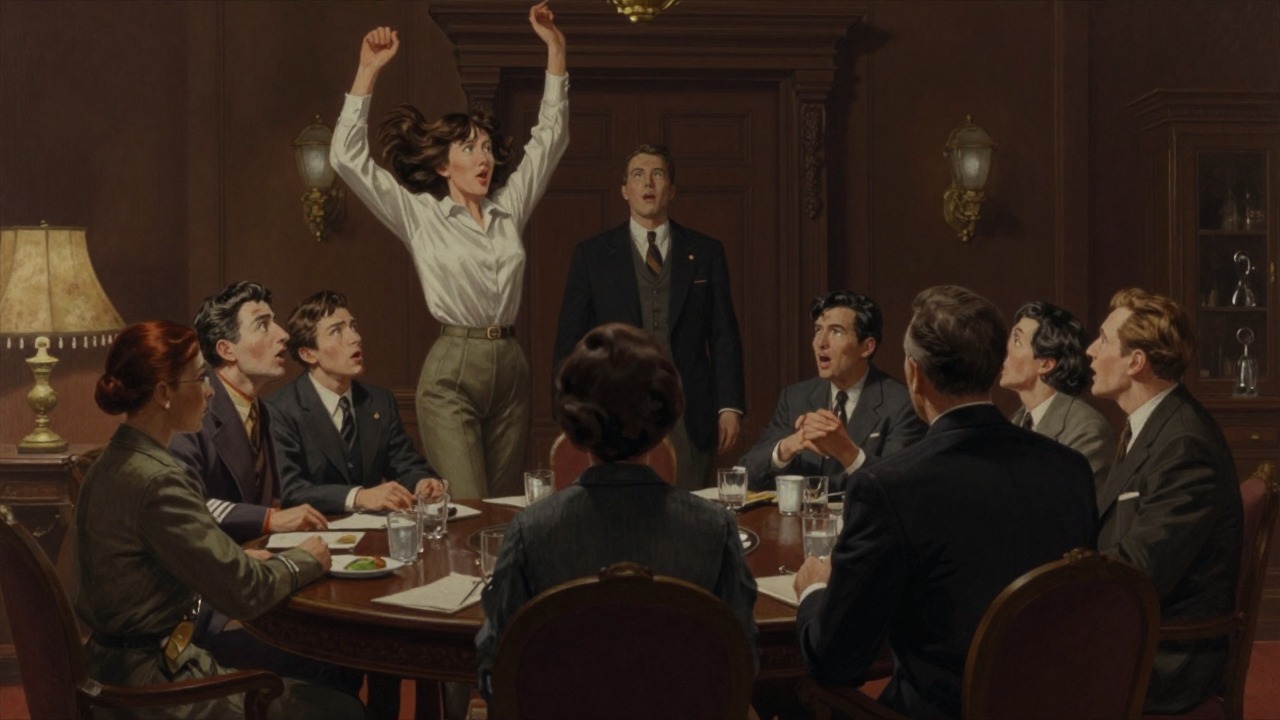
Death of Bormann
Context
The Reichs Chancellor dies, and the news crackles out of every radio. In Canon City, Juliana Frink and Joe Cinnadella leap to their feet; in San Francisco, Nobusuke Tagomi cancels his day and hurries to an emergency embassy meeting.
Turning Point
At the Japanese Embassy, Tagomi listens to the Foreign Office analyze the Nazi contenders. He is overcome by the monstrous litany of evil, a moment that plants a seed of moral collapse in him.
Significance
Bormann's death is the engine that moves the second half of the novel. It opens the door for the Goebbels faction, which favors the Dandelion strike, and it makes Wegener's warning urgent.
Goebbels Named Chancellor
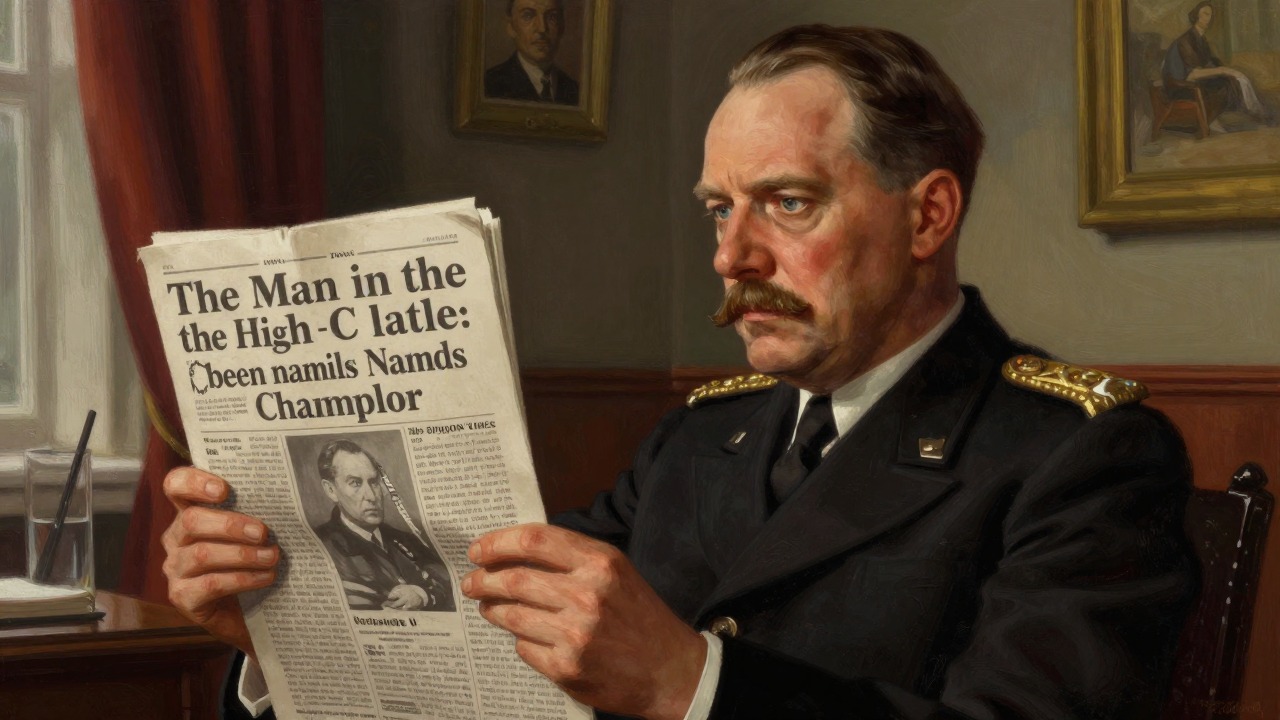
Goebbels Named Chancellor
Context
The Nippon Times reports that Joseph Goebbels has been named Reichs Chancellor after a dramatic radio speech. Wegener reads the headline in his hotel room and understands that his worst fears are coming true.
Turning Point
Goebbels is an advocate of Operation Dandelion, while the police faction led by Heydrich opposes it. The balance of terror inside the Reich has shifted toward war with Japan.
Significance
This news forces Wegener to abandon the cautious approach. He can no longer wait for Mr. Yatabe; he must get the information to Tagomi by whatever means remain.
Politics at the Kasoura Dinner
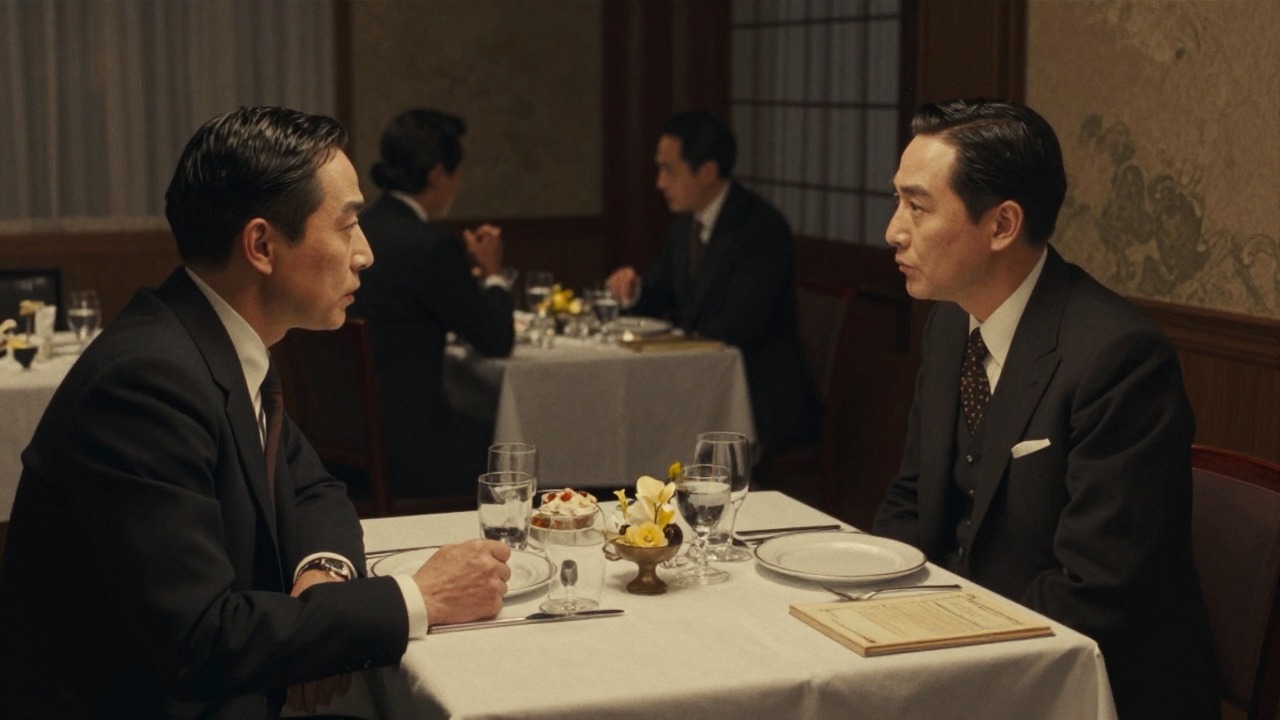
Politics at the Kasoura Dinner
Context
At a social evening, Robert Childan tries to join the Japanese conversation about the Reich succession. He makes one clumsy remark after another, defending the winners and dismissing rumors about Göring's degeneracy.
Turning Point
Paul Kasoura quietly steers the talk away from politics, and the dinner becomes a study in humiliation for Childan. He realizes he is a white barbarian in a world run by his former enemies.
Significance
The dinner shows how the Reich crisis reverberates even in private life on the Pacific Coast. For Childan, it deepens his need to find a new source of dignity.
Heydrich's Shadow Over the SD
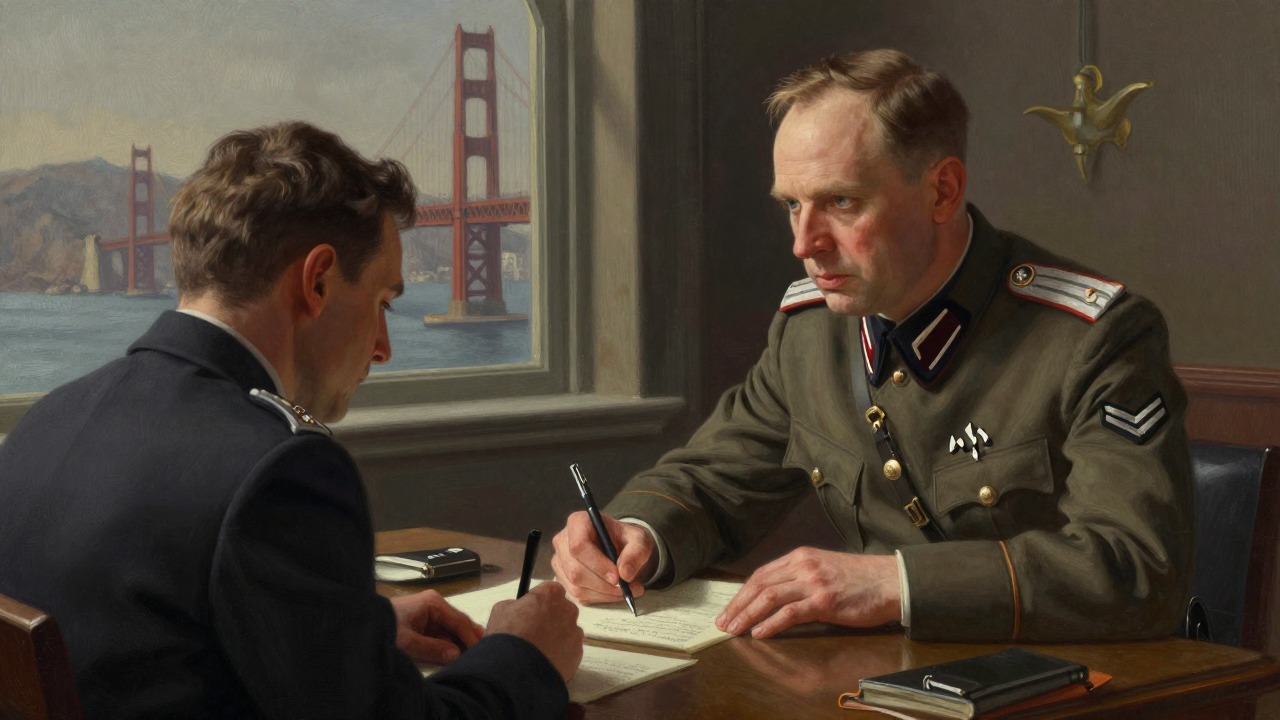
Heydrich's Shadow Over the SD
Context
Bruno Kreuz vom Meere, the local SD chief, explains to Consul Hugo Reiss that a renegade Abwehr officer is in San Francisco. He has orders from the Heydrich faction to seize Wegener before the Japanese can protect him.
Turning Point
Reiss reluctantly writes the authorization, and the SD moves its murder squad into place. He resents that the decision has been taken over his head by the police apparatus back in Berlin.
Significance
The conflict between the SD and the Abwehr is the Reich's civil war in miniature. It dictates not only Wegener's fate but also whether Japan will learn of Dandelion in time.
Return Under the Blackshirts
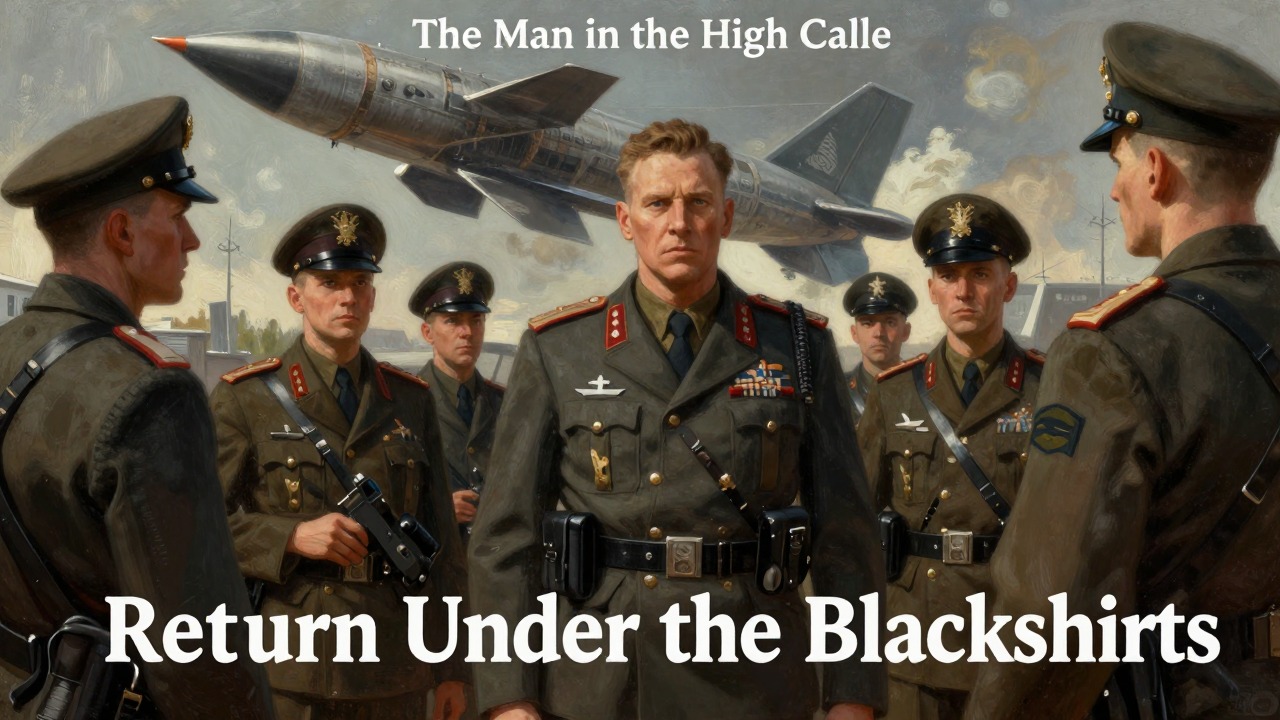
Return Under the Blackshirts
Context
When Wegener's rocket lands in Berlin, Waffen-SS men come straight to him. They are loyal to Heydrich, not to Goebbels, and they take him into custody.
Turning Point
Wegener realizes he is still alive and that the anti-Dandelion faction has not yet lost. He lets himself be driven through the city, knowing that every minute of his life now depends on the outcome of the Nazi power struggle.
Significance
The ending of the Reich succession thread is unresolved, but the shape of the conflict is clear. The Nazi State is devouring itself, and the world waits to see which branch of evil will rule.
the news bulletin interrupting radios in Canon City and San Francisco
the morning of the Nippon Times headline
during the dinner at Paul and Betty Kasoura's apartment
while Hugo Reiss and Bruno Kreuz vom Meere coordinate the capture
the moment Wegener lands at Tempelhof
